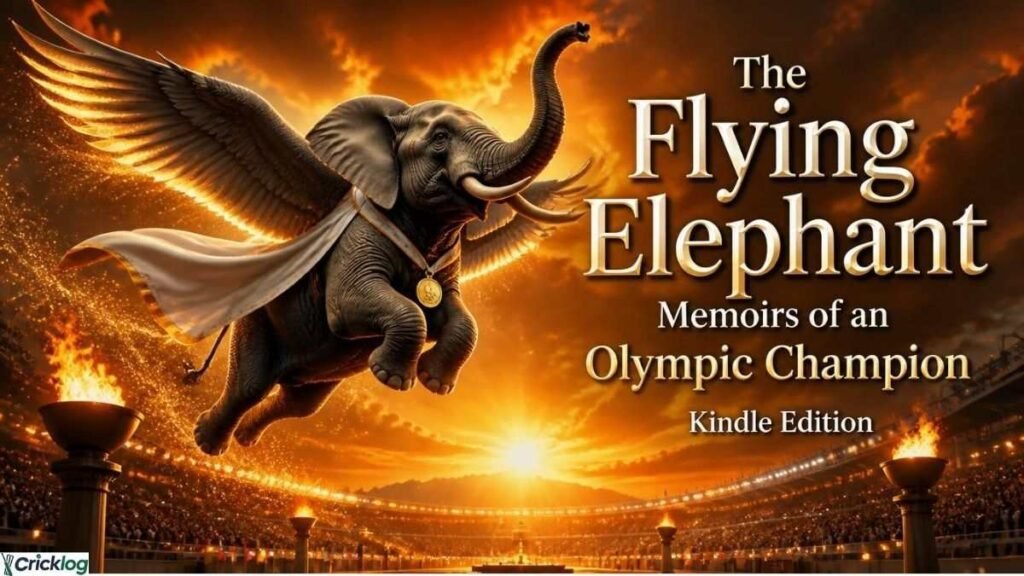


Most Olympic memoirs tell the same story. You see the struggle. Then the victory. Then the celebration. It all feels clean. Almost too clean.
The Flying Elephant Memoirs of an Olympic Champion does not follow that path.
This book is different. Alexander Savin wrote it. He is a Soviet volleyball player who won Olympic gold in 1980. But the book does not just celebrate his medals. It explores what it actually costs to reach the top. It looks at the pressure. The sacrifice. The identity struggles.
If you are looking for the flying elephant memoirs of an Olympic Champion Kindle edition, you probably want something more than a simple victory story. You want to understand the real journey behind Olympic success. This guide breaks down everything you need to know about the book, the author, and why this memoir stands out.
Who Is Alexander Savin?
Alexander Savin is one of the best volleyball players in history. He was born on July 1, 1957, in Taganrog, Russia. As a child, he moved with his parents to Obninsk. That is where he first started playing volleyball. His first coach was Vladimir Pitanov.
Savin played as a middle blocker. He stood 200 cm tall, which is about 6 feet 7 inches. He played for the Soviet Union national team from 1975 to 1986.
Early Life and Sporting Background
Savin grew up in a time when the Soviet sports system was very organized and demanding. He did not become a champion overnight. His early years were shaped by discipline and hard work. As a student in Obninsk, he played club volleyball starting in 1967 for Obninsk Youth. The sports school where he trained now carries his name.
His path to the top was not easy. Training conditions were strict. Competition was intense. But Savin stayed focused on improving his game.
Rise Through Soviet Volleyball
Savin’s talent became clear very quickly. He joined CSKA Moscow. This was one of the most successful volleyball clubs in the Soviet Union. He went on to win the Soviet national championship 13 times.
His success at the club level earned him a place on the Soviet national team. By the mid-1970s, he was competing against the best players in the world.
Olympic Career and Major Achievements
Savin’s Olympic career includes some of the most impressive achievements in volleyball history:
- Olympic Silver Medal in 1976. He played in all five matches at the Montreal Olympics. The Soviet team reached the final but lost to Poland in a tight 3-2 match.
- Olympic Gold Medal in 1980. Four years later, Savin won gold at the Moscow Olympics. He played in all six matches as the Soviets dominated the tournament.
- FIVB World Championship Gold in 1978 and 1982. He helped the Soviet Union win back-to-back world titles.
- FIVB World Cup Gold in 1977 and 1981. He won the World Cup twice.
- Six European Championship Gold Medals. Savin won the European Championship six times between 1975 and 1985.
Legacy as an Olympic Champion
Savin is considered one of the most decorated players in volleyball history. He was inducted into the International Volleyball Hall of Fame in 2010. He was also nominated as one of the best volleyball players of the century.
After retiring as a player, Savin continued to contribute to volleyball as a coach and mentor.
Why Is the Book Called The Flying Elephant?

The title The Flying Elephant sounds unusual. That is the point.
The Meaning Behind the Title
An elephant is heavy. It is powerful. It stays on the ground. It does not fly. So a flying elephant is something that should not be possible.
In this book, the title is a word picture for what Olympic athletes do. They achieve things that seem impossible. They perform beyond normal human limits. They look graceful while carrying enormous weight.
How the Title Reflects Savin’s Journey
The nickname “Flying Elephant” was originally used by fans and sports journalists to describe Savin’s playing style. He was big and strong. But he moved quickly and jumped with surprising grace. He combined strength with agility in a way that seemed to defy logic.
The title also shows the main idea of the book. Savin’s journey was about achieving something that looked impossible through hard work, structure, and consistent effort.
What Is The Flying Elephant: Memoirs of an Olympic Champion About?
The memoir covers Savin’s full journey. It does not just focus on the wins. It explores every stage of his life and career.
Childhood and Early Sporting Years
The book begins with Savin’s early life. It shows how his interest in volleyball first developed. He did not become a star overnight. The memoir explains how dedication and constant practice shaped his career from a young age.
Entering Elite Soviet Volleyball
Savin describes the move from a young athlete to a player in the Soviet national system. Training conditions were strict. The competition was intense. But Savin stayed focused on improving.
The Road to Olympic Competition
The memoir covers the years of preparation leading up to the Olympics. It explains the physical and mental demands of elite sport. Athletes had to train for long hours every day.
The Experience of Competing at the Olympics
The Olympic chapters are some of the most exciting parts of the book. Savin describes the pressure of competing against the best teams in the world. He shares details about match preparation, teamwork, and mental focus.
Life After Elite Competition
The memoir does not end at retirement. It follows Savin into coaching and mentorship. It explores the question that many athletes face: What comes next after the competition ends?
Alexander Savin’s Journey to Olympic Success
Savin’s path to Olympic gold was not straightforward. It was built on years of preparation and sacrifice.
Training Under the Soviet Sports System
The Soviet sports system during Savin’s era was highly structured. It was designed to produce champions. Training was never-ending. Every part of an athlete’s performance was measured and improved.
Challenges Before Reaching the Olympic Stage
Savin faced many challenges before reaching the top. The loss at the 1976 Montreal Olympics was a major setback. The Soviet team had been heavy favorites. Losing the final was difficult. But it only made them more determined.
Key Turning Points in His Career
- Joining CSKA Moscow. This gave him access to top-level training and competition.
- Winning the 1977 FIVB World Cup. This proved that the Soviet team was back on top.
- Winning the 1978 FIVB World Championship. This showed their dominance.
- The 1980 Moscow Olympics. This was his greatest achievement. He won gold in front of a home crowd.
The Experiences Behind His Olympic Success
Savin’s success was not based on talent alone. It was built on discipline, teamwork, and mental strength. He learned to handle stress, expectations, and strong opponents.
Inside Soviet Volleyball During Savin’s Era
The Soviet Union dominated international volleyball during the 1970s and 1980s. Savin was a key part of that success.
Training and Preparation Methods
- Daily high-intensity training sessions.
- Tactical drills repeated over and over.
- Mental conditioning as a core focus.
- Physical fitness, teamwork, and strategy all played major roles.
The Role of Coaching and Teamwork
Savin played under the direction of coach Yuri Tchesnokov. He was later inducted into the Volleyball Hall of Fame. Coaching was central to the team’s success. Teamwork was also essential. Individual brilliance alone was not enough to win at the Olympic level.
Competition During the Cold War Era
During the Cold War, Olympic competition carried weight far beyond individual achievement. Matches were often seen as symbolic contests between political systems. Athletes faced intense national expectation.
What Made Soviet Volleyball So Competitive
- Centralized training programs.
- Strict discipline standards.
- A focus on the team over the individual.
- A focus on long-term development over quick results.
The Human Side of an Olympic Champion

One of the most powerful parts of the memoir is its honesty about the human cost of elite sport.
Sacrifices Behind Athletic Success
- Personal relationships.
- Time with family.
- Physical health.
- Emotional stability.
Nothing comes free at this level.
Pressure and Expectations at the Highest Level
Even champions feel fear. In fact, they may feel it more intensely. Fear of failure. Fear of letting others down. Fear of losing identity. Savin does not hide these feelings.
Failure, Setbacks, and Personal Growth
The memoir does not skip setbacks. The loss at the 1976 Olympics was a major disappointment. But Savin treats losses and mistakes as necessary lessons that shaped later success.
Life Beyond Medals and Competition
Winning does not end the journey. Sometimes, it makes things harder. Savin explores the loss of identity after competition and the question that follows: What now?
Major Themes in The Flying Elephant
The memoir explores several important themes that go beyond sports.
Discipline and Consistent Preparation
Motivation fades. Discipline does not. Savin makes this clear throughout the book. Success is not about feeling inspired. It is about showing up anyway.
Mental Strength Under Pressure
Athletes must stay calm under pressure and maintain confidence during difficult matches. Mental strength is just as important as physical skill.
Teamwork and Leadership
Team chemistry affects performance. Savin’s leadership style was quiet rather than loud. He led through consistency and example.
Resilience Through Failure
Setbacks are part of the process. They are not the end. The 1976 silver medal became fuel for the 1980 gold medal run.
Humility and Life After Success
The memoir explores what happens after the medals are won. Success does not solve everything. Sometimes, it creates new challenges.
What Makes The Flying Elephant Different From Other Olympic Memoirs?
| Traditional Olympic Memoir | The Flying Elephant |
|---|---|
| Focuses on victories | Questions victories |
| Focuses on events | Focuses on feelings |
| Motivational tone | Reflective tone |
| Celebrates success | Explores the cost of success |
| Individual glory | Teamwork and collective achievement |
A Personal View of Elite Volleyball
The memoir offers a rare insider’s view of volleyball during its most competitive era. Savin shares details that most athletes do not discuss publicly.
Behind-the-Scenes Perspective on Olympic Competition
Readers get a look at what happens behind the curtain. The pressure. The silence. The cost of greatness.
Insights Into Soviet-Era Sports
Few Soviet-era athletes have documented their careers in this much personal detail. The memoir preserves a moment in international sports history.
A Story Focused on the Athlete Behind the Champion
The book is not built around personal fame. It centers on the person behind the medals.
What Readers Can Learn From Alexander Savin’s Story
Building Mental Toughness
Confidence comes from preparation. It does not come from natural talent alone. Trusting your training under pressure is a learned skill.
Developing Discipline and Consistency
Consistency beats talent. Small daily habits add up to big results.
Learning From Failure
Losses are not the end. They are lessons that shape future success.
Understanding Teamwork and Leadership
Shared accountability matters. Trust is built through repetition. Communication under pressure is essential.
Applying Athletic Lessons Beyond Sports
The lessons of discipline, resilience, and teamwork apply to business, education, and personal growth.
The Historical Value of The Flying Elephant
A Look at Soviet-Era Athletic Culture
The memoir documents a sports system that no longer exists. It shows how athletes were trained, supported, and expected to perform.
The Olympic Experience During a Historic Period
The 1980 Moscow Olympics were a unique moment in history. Savin gives readers a firsthand account of what it was like to compete in that environment.
Its Contribution to Volleyball and Sports Literature
Volleyball has fewer detailed athlete memoirs compared to sports like basketball or football. This book is a notable addition to the sport’s literature.
The Flying Elephant Kindle Edition
| Detail | Information |
|---|---|
| Title | The Flying Elephant Memoirs of an Olympic Champion |
| Author | Alexander Savin |
| Format | Kindle Edition |
| Photographs | Over 240 rare images |
| Genre | Sports Memoir / Autobiography |
Kindle Edition Availability and Book Details
The Kindle edition makes the book accessible to readers around the world. It includes more than just text. The digital version features over 240 rare photographs. These pictures span five decades of volleyball history.
These are not polished publicity shots. They come from private family collections and public archives. They show training camps, Olympic competitions, championship matches, and intimate moments with legendary players.
Reading the Memoir on Kindle Devices and Apps
The Kindle format allows readers to access the book on many devices. You can read it on a Kindle e-reader, a smartphone, or a tablet using the Kindle app.
Who Should Choose the Kindle Edition?
- Readers who want instant access to the book.
- Those who prefer digital reading over physical copies.
- Readers who want to see the photographs in high resolution.
- Anyone outside regions where the print edition may not be available.
Who Should Read The Flying Elephant?
Volleyball Players and Sports Fans
This book offers a rare inside look at volleyball during its golden era. Any fan of the sport will find it valuable.
Athletes, Coaches, and Trainers
The lessons on discipline, mental toughness, and teamwork are directly useful for anyone involved in sport.
Readers Interested in Olympic History
The memoir documents a historic period in Olympic competition. It offers perspectives that are not available elsewhere.
Fans of Sports Memoirs and Biographies
If you enjoy honest, reflective sports stories, this book is worth your time.
Strengths and Limitations of The Flying Elephant

What Makes the Memoir Worth Reading
- Deep emotional honesty.
- A unique perspective on Soviet-era sports.
- Strong philosophical depth.
- A realistic look at success and its costs.
- Over 240 rare photographs.
Where Some Readers May Find It Limited
- Less action-driven storytelling.
- Some abstract sections.
- Not for readers seeking quick, light motivation.
How The Flying Elephant Compares With Other Sports Memoirs
What Makes Savin’s Memoir Stand Out
Most sports memoirs focus on moments of victory. This one focuses on meaning. It trades glamour for honesty.
How It Differs From Typical Olympic Biographies
Typical Olympic biographies celebrate individual achievement. Savin’s memoir centers on teamwork and collective achievement. It shows the process behind the medals, not just the final scoreline.
Is The Flying Elephant: Memoirs of an Olympic Champion Worth Reading?
The Best Reasons to Read the Memoir
- It offers an honest look at what elite sport actually costs.
- It preserves a historic era of volleyball.
- It provides practical lessons on discipline and resilience.
- It includes over 240 rare photographs.
Who Will Get the Most From the Book
Athletes, coaches, sports fans, and anyone interested in Olympic history will find value in this memoir. Readers who appreciate honest, reflective storytelling will enjoy it most.
Final Verdict on the Kindle Edition
The Kindle edition makes this important memoir accessible to a global audience. The inclusion of over 240 photographs adds significant value. For anyone interested in volleyball, Olympic history, or the human side of elite sport, this book is worth reading.
Conclusion
The Flying Elephant Memoirs of an Olympic Champion is more than a volleyball story. It is a detailed record of what elite performance actually requires. Alexander Savin’s journey from a small Russian town to Olympic gold shows that extraordinary results come from ordinary discipline. That discipline was applied consistently over time.
For athletes, coaches, and anyone chasing a difficult goal, this memoir offers a rare and honest look at the path to success. The Kindle edition makes it accessible to readers everywhere. It preserves an important piece of sports history for future generations.
FAQs
Is The Flying Elephant Memoirs of an Olympic Champion a true story?
Yes, it is an autobiographical memoir based on Alexander Savin’s real experiences.
Who wrote The Flying Elephant Memoirs of an Olympic Champion?
Alexander Savin wrote it. The English edition was translated and edited by his family.
What does the title “The Flying Elephant” mean?
It is a word picture for achieving something that looks impossible through years of hard work. It also reflects Savin’s playing style. He was big but moved with surprising agility.
Is the book only about volleyball?
Volleyball is central to the book. But the themes of resilience, teamwork, and discipline apply well beyond sports.
How long is the English edition?
The English Kindle edition has 514 pages. It includes over 240 rare photographs.